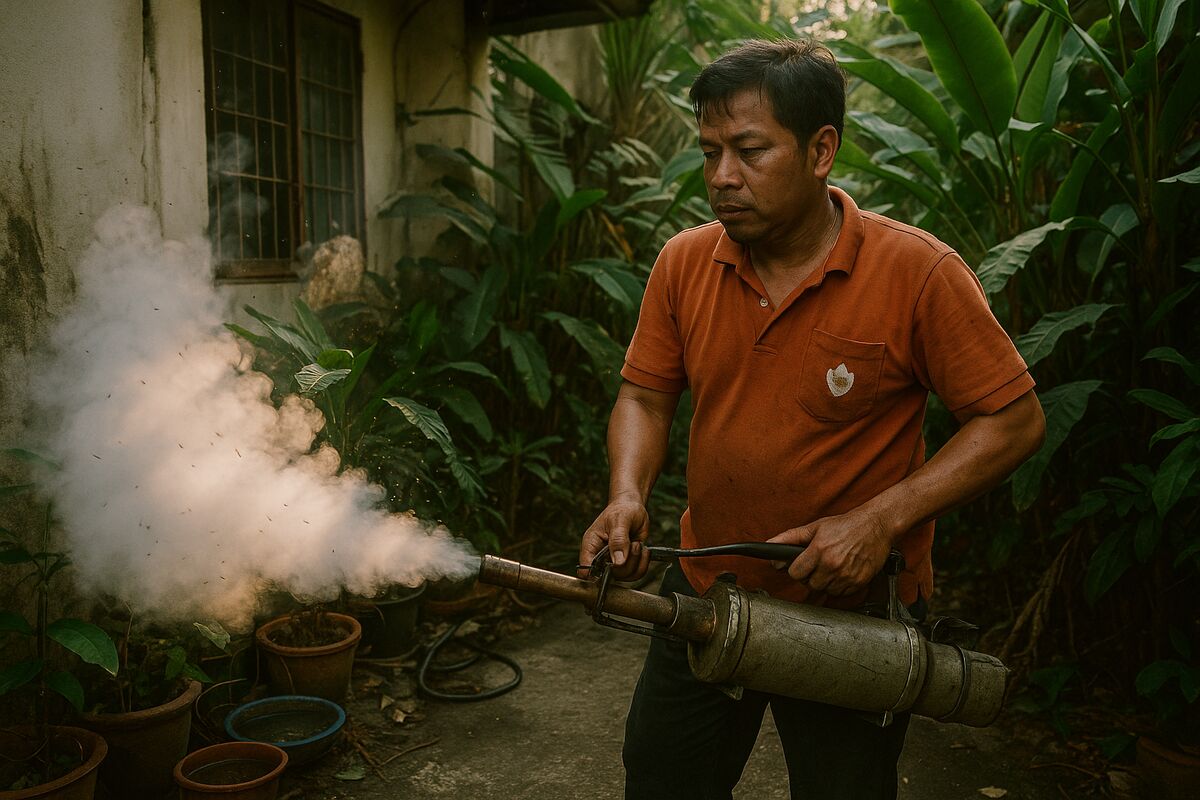
If you've lived in Bangkok through even one rainy season, you know the pattern: the first big storms hit in May, the puddles arrive, and a few weeks later everyone's group chat has someone with a fever they're nervously monitoring. Dengue Bangkok prevention isn't complicated, but it is specific — and the window to do it properly is right now, in the weeks before the rain becomes a daily event.
This guide covers what dengue actually is, why the mosquito that carries it behaves differently from the ones you're used to swatting at sunset, and a room-by-room plan to mosquito-proof your home. It's the same checklist our PestsRova technicians run through on a mosquito service visit, minus the sprayer.
Why Dengue Prevention in Bangkok Starts With One Mosquito
Dengue is transmitted almost entirely by Aedes aegypti — a small, black-and-white striped mosquito that is superbly adapted to city living. A few facts about it change everything about how you protect your home:
- It bites during the day. Peak activity is early morning and late afternoon. That evening mosquito coil on the balcony? Mostly protecting you from Culex mosquitoes, which are annoying but not dengue carriers. The Aedes mosquito is biting your ankles under the desk at 10 a.m.
- It breeds in tiny amounts of clean water. Not the khlong. Not the flooded soi. A bottle cap of rainwater can produce mosquitoes. Its favourite nurseries are man-made containers: plant saucers, buckets, vases, and AC drip trays.
- It doesn't fly far. Aedes aegypti typically stays within about 100–200 metres of where it hatched. If you're being bitten at home during the day, the breeding site is almost certainly on your property or your immediate neighbour's.
- It prefers to rest indoors. Dark corners, under furniture, behind curtains, inside wardrobes. It lives with you.
That last point is the one people miss. Effective dengue Bangkok prevention is mostly a housekeeping and building maintenance problem, with chemicals playing a supporting role. Kill every adult mosquito in your condo today, and if the breeding site next to your AC compressor is still wet, you'll have a new generation within a week or two.
The Breeding Site Audit: Where Bangkok Homes Actually Grow Mosquitoes
Grab your phone, set a 20-minute timer, and walk your home with this list. You're looking for anything that holds water for more than a few days — that's roughly how long Aedes needs to go from egg to flying adult in Bangkok's heat.
Outdoors and balcony:
- Plant saucers. The number one culprit in Bangkok homes, full stop. Either remove them, drill drainage, or empty and scrub them weekly (eggs stick to the sides — dumping the water alone isn't enough).
- Air conditioner drip trays and condensate lines. Split-unit compressors on balconies often drip into a tray or a low spot that never fully dries. Check where your condensate line actually ends.
- Spirit houses and offering cups. Water offerings are common breeding sites. Change the water at least weekly, or use sand-filled cups with fresh flowers.
- Buckets, basins, watering cans, mop buckets. Store them upside down. Always.
- Tarpaulins and covers. Motorbike covers, folded tarps, and outdoor furniture covers hold pockets of rainwater in their folds.
- Gutters and flat-roof drains. Blocked gutters are elevated ponds. If leaves collect there, they need clearing before May.
- Ornamental ponds and water features. Fish that eat larvae (guppies work) or a proper larvicide. PestsRova uses aquatic-safe larvicides in ponds and water features, so treatment doesn't mean losing your fish or your lotus.
Indoors:
- Flower vases. Change water every 2–3 days, or switch to gel beads or sand.
- Refrigerator and water-dispenser drip pans. Pull the fridge out once; you may be surprised.
- Bathroom floor drains and rarely used toilets. In guest bathrooms that see little use, water in the trap can stagnate. Flush unused toilets and run unused drains weekly.
- Behind the washing machine. Slow leaks create permanent damp patches and standing water.
If you live khlong-side or near one of Bangkok's canals, don't panic about the canal itself — moving, polluted water is poor Aedes habitat. Worry instead about the containers in the strip of land between you and the water: discarded tyres, plastic bags, coconut shells, and construction debris are classic breeding sites. That's often communal land, so raise it with your juristic office or district office (สำนักงานเขต), which runs larviciding programs during outbreak season.
Screens, Seals, and Airflow: The Physical Defences
Once you've cut off breeding, the second layer is keeping mosquitoes out of the rooms you live in.
- Window screens. The single best investment. Standard fibreglass mesh (about 1.2 mm aperture) blocks Aedes easily. In Bangkok, retractable and magnetic-frame screens can be fitted to most condo windows without drilling — worth asking your juristic office what's permitted on the façade.
- Door discipline. Balcony doors propped open all afternoon undo everything. A magnetic mesh curtain on the balcony door costs a few hundred baht and closes itself.
- Seal the gaps. Mosquitoes enter through gaps under doors, around pipe penetrations, and via bathroom vent stacks. A door brush strip and some sealant close most of them.
- Use the AC and fans strategically. Aedes is a weak flyer. A fan pointed across your desk or sofa during peak biting hours (morning, late afternoon) genuinely reduces bites — it's one of the few "home remedies" with real evidence behind it.
- Bed nets for daytime nappers. Babies and anyone who naps during the day should sleep under a net or in a screened room, because daytime is exactly when the dengue mosquito hunts.
What Repellents and Sprays Are Actually Worth Using
Quick, honest rundown:
- DEET, picaridin, or IR3535 on skin — proven, safe when used as directed, and the right call for time outdoors. Reapply per the label; sweat shortens the working time in Bangkok humidity.
- Mosquito coils and plug-in vaporisers — useful in semi-open areas like balconies, but they're a deterrent, not a solution, and you shouldn't be breathing coil smoke indoors all day.
- Aerosol "one-push" sprays — fine for knocking down the mosquito in your bedroom tonight. They do nothing about tomorrow's mosquitoes.
- Citronella candles and repellent plants — pleasant, weak, and very localised. Don't build your dengue plan on them.
- Professional barrier treatment — a residual insecticide applied to the surfaces where Aedes rests (walls, undersides of furniture, dark corners, vegetation), plus larviciding of any water that can't be drained. This is what actually suppresses the population rather than dodging individuals, and it's what a professional mosquito control service does that a can of spray can't.
A note on safety, since it's the first question we get: modern residual treatments, applied correctly, are designed to be safe for households with children and pets once dry. PestsRova uses pet- and kid-safe products as standard, and every visit ends with a photo and treatment report showing exactly what was applied and where — useful for your own records, and for showing a landlord or juristic office that the work was done.
Your Pre-Rainy-Season Timeline
Here's how to sequence it. Rainy season proper usually arrives mid-May; work backwards from there.
| When | What to do | |---|---| | Late April | Full breeding-site audit (list above). Clear gutters, fix drips, drill or remove plant saucers. | | Early May | Fit or repair window screens and door mesh. Seal gaps. Stock skin repellent. | | Mid-May | First barrier treatment if you're using one — before populations build, not after. | | May–October | Weekly 5-minute water patrol: saucers, trays, vases, offering cups. Scrub, don't just dump. | | Ongoing | Report communal breeding sites (blocked drains, construction water, junk piles) to your juristic office. |
The weekly water patrol matters more than anything else on this table. Aedes eggs can survive dry for months and hatch when rewetted — which is why a container that "was dry last month" refills and produces mosquitoes within days of the first storm.
When to Call a Professional
Do-it-yourself gets you a long way. Call in help when:
- You're being bitten indoors during the day despite a clean audit — the breeding site may be somewhere you can't see or reach (roof void, neighbouring unit, shared drainage).
- You have a garden, pond, or dense vegetation. Plants are prime resting habitat, and treating them properly needs the right equipment and aquatic-safe products.
- Someone in the household has had dengue. Repeat infections carry a higher risk of severe dengue, so pushing the local mosquito population down hard is worth doing.
- You manage a rental or Airbnb, where guest comfort and reviews are on the line — our HostShield program exists for exactly this.
PestsRova's mosquito treatments start from ฿1,590 per visit (by home size), and the 12-Visit Year Package includes a mosquito barrier as standard — which, spread across a Bangkok wet season, is the difference between managing mosquitoes and hosting them. We're licensed and insured, our lead technicians speak English, and we cover every BTS/MRT zone in Bangkok, daily from 8:00 to 20:00.
Common Mistakes That Undo Good Dengue Prevention
We see the same handful of own-goals on inspection after inspection:
- Dumping water without scrubbing. Aedes eggs are glued to container walls above the waterline and survive months of drought. Empty-and-refill just restarts the clock; empty-and-scrub actually resets it.
- Only defending the evening. Coils at sunset, spray at the barbecue — while the dengue mosquito did its work at 9 a.m. by the desk. Match your defences to a daytime biter.
- Treating once, in July. By mid-season the population is established and every neighbour's balcony is reseeding yours. Barrier treatments work best started in May and maintained — which is why the mosquito barrier lives inside our 12-visit package rather than as a one-off.
- Forgetting the second AC unit. People check the balcony compressor and miss the condensate line from the bedroom unit dripping into a shaded corner that never dries.
- Assuming a high floor means immunity. Aedes breeds on 20th-floor balconies as happily as in gardens. The saucer doesn't know its altitude.
The Bottom Line on Dengue Bangkok Prevention
No single measure stops dengue. What works is stacking layers: no standing water on your property, screens on the openings, repellent when you're outdoors in the morning and late afternoon, and — where the environment warrants it — a professional barrier treatment before the season peaks. Do the audit this week, put the water patrol in your calendar, and you'll go into the rains with the odds firmly on your side.
One last thing: if you develop a high fever during rainy season, especially with headache, pain behind the eyes, or muscle aches, see a doctor and mention dengue. Early diagnosis matters, and Bangkok's hospitals test for it routinely. Prevention is the goal — but knowing the symptoms is part of the plan too.
Want a professional set of eyes on your home before the rains? Book a mosquito-proofing visit or message us on LINE or WhatsApp — we'll audit your breeding sites, treat what needs treating, and leave you a photo report of everything we found. Same-day slots run until 22:00 if the biting has already started.
Frequently asked questions
When is dengue season in Bangkok?
Dengue cases climb a few weeks after the rains begin, typically from mid-May through October. The mosquito-proofing window is late April to early May: audit breeding sites, clear gutters, fit screens and book any barrier treatment before mid-May so populations never build. Weekly water patrols should then continue all wet season.
What time of day do dengue mosquitoes bite?
During the day. Aedes aegypti is most active in early morning and late afternoon, biting ankles under desks and around balconies rather than at dusk. Evening coils mainly deter Culex mosquitoes, which are a nuisance but not dengue carriers. Use skin repellent, screens and a fan during the daytime peak hours.
How do I stop mosquitoes breeding on my Bangkok balcony?
Remove or drill plant saucers, or empty and scrub them weekly, since Aedes eggs stick to container walls and survive dry for months. Check AC condensate trays, spirit-house cups, buckets, tarpaulin folds and gutters. Store buckets upside down and change vase water every 2–3 days. A bottle cap of water is enough to breed mosquitoes.
Is professional mosquito treatment safe for kids and pets?
Yes, when applied correctly. Modern residual barrier treatments go on resting surfaces such as walls, undersides of furniture and vegetation, and are safe for households with children and pets once dry. PestsRova uses pet- and kid-safe products as standard and aquatic-safe larvicides in ponds, and provides a photo report of what was applied where.
Need it handled professionally?
Get a fixed quote for your Bangkok property in under 60 seconds.
Written by the PestsRova Team
We're Bangkok's documented pest control crew — everything we write comes from real treatment visits across homes, condos and short-stay rentals.
Get our Bangkok pest guides straight in Google — add PestsRova as a preferred source.
Add on Google