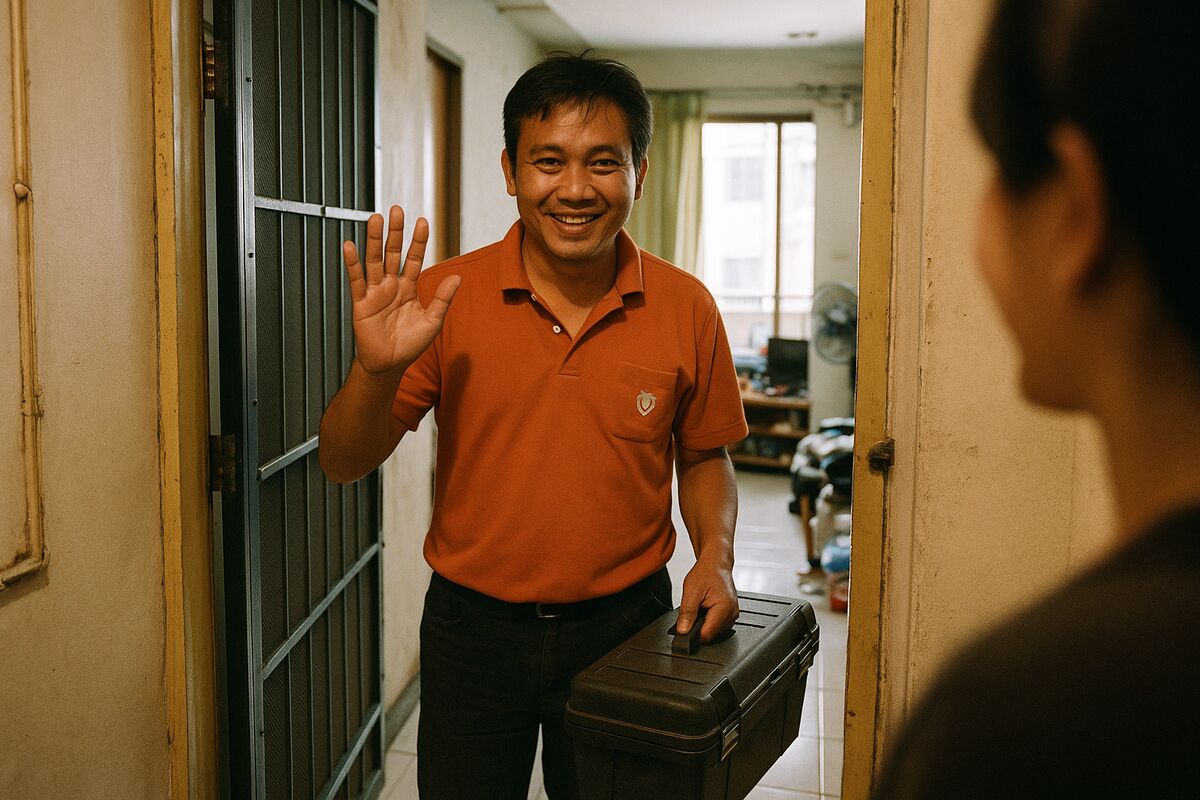
For most Bangkok residents, a cockroach in the kitchen is a nuisance. For an Airbnb host, it's a business event: a 2 a.m. guest message, a possible refund, a calendar you might have to block, and — the part that outlives everything — a review containing the word roaches in a language Google happily translates for every future guest.
That asymmetry is why Airbnb pest control in Bangkok deserves its own comparison rather than a footnote on general advice. Hosts here typically rely on some mix of three layers: the condo building's free juristic fogging, on-demand pest control booked when something appears, and dedicated host programs built around prevention plus emergency response. Each layer solves a different part of the problem, and the right mix depends mostly on how busy your calendar is.
Full disclosure before the comparing starts: PestsRova is our own service and HostShield is our own host program — so judge those entries with that in mind, and hold us to the same criteria we apply to the alternatives. Two of the three options in this article cost less than ours, and for some listings they're the right answer.
Why Hosting Changes the Maths Entirely
The economics of pests flip when guests are involved, and it's worth being precise about why:
- Speed stops being optional. A resident can live with a roach sighting until Saturday. A host has a guest in the unit now, mid-stay, documenting. The difference between same-day and next-week response is often the difference between a managed hiccup and a refunded booking.
- The cost of an incident isn't the treatment. It's the refund or rebooking, the nights blocked while you fix it, the cleaning re-do, and the review. A treatment visit is a four-figure baht expense; a bad pest incident on a busy listing routinely costs five figures once lost nights are counted.
- Reviews are permanent inventory damage. Pricing recovers; a pest mention in your last ten reviews suppresses bookings long after the pests are gone.
- Turnover creates pressure residents don't have. Constant luggage from around the world (the bed bug vector), food waste spikes after checkouts, and units sitting empty between bookings with dry drains — an open highway for roaches. A short-term rental is structurally more exposed than the identical unit lived in full-time.
In other words: hosts aren't buying dead insects, they're buying uninterrupted calendars and clean reviews. Evaluate every option below against that, not against the sticker price.
Layer One: The Building's Juristic Fogging
Your condo's juristic office almost certainly runs periodic fogging of common areas — gardens, car park, bin rooms, drains — funded by common fees you already pay. As Airbnb pest control in Bangkok goes, it's the free layer, and a genuinely useful one: it suppresses mosquitoes around the property (a real guest-comfort issue, and a dengue-season one) and keeps pressure down in the shared spaces guests walk through.
Its limits, though, are structural. The fog never enters your unit; it has little residual effect; and it does nothing about the pests that actually generate guest complaints — cockroaches in the kitchenette, ants on the counter, and bed bugs, which no fog anywhere will ever reach. A host relying on building fogging alone is protected in the lobby and naked in the listing.
Use it, but manage it: get the fogging schedule from the juristic office so cleaners can close windows on fogging days, and report common-area sources (bin rooms, drain stacks) in writing when your technician traces problems to them. It's free pressure relief on the building — just never the answer to a guest message.
Layer Two: On-Demand Pest Control
The default for most hosts: something appears, you book a treatment. Every provider type offers it, from franchise brands to the independent sprayer in your soi's LINE group, and at our shop it means flat pricing by unit size — ฿1,590 for a studio, ฿1,990 for a 1-bedroom, ฿2,490 for a 2-bedroom, any common pest, with 15% off a first treatment and a free re-treat within 30 days.
On-demand's genuine strengths for hosts:
- You pay only when there's a problem. For a listing booked a handful of nights a month, this is hard to beat on cost.
- It's flexible. Any provider, any time, no commitment; you can audition companies cheaply (our guide to pest control cost in Bangkok maps what callouts run across the market).
- Done well, it's decisive. A proper baiting-and-residual treatment of a small unit, plus a re-treat guarantee, usually resets it to zero.
Its weaknesses are exactly where hosting hurts most:
- It's reactive by definition. The trigger for booking is usually a guest finding the problem first — meaning the review risk has already happened before the treatment is booked.
- Speed isn't guaranteed. As a walk-in customer you're in the general queue. Most providers will do their best; none of them owes you today.
- Scheduling fights your calendar. Treatments need access, and back-to-back bookings mean your only windows are turnover gaps — which is precisely when your cleaner also needs the unit.
- Per-incident economics degrade with occupancy. Three incidents a year on a busy listing, each with blocked nights attached, and you've spent host-program money without buying any prevention.
Verdict: the right layer for low-occupancy listings and lucky buildings — and the wrong primary strategy for a full calendar, where the incident, not the treatment, is the real cost.
Layer Three: A Dedicated Host Program
The third model exists because of everything above: scheduled preventive treatment so problems don't start, plus a standing emergency commitment so mid-stay surprises get handled inside the guest's stay rather than after it. In the general market this looks like a commercial-style service agreement adapted to short-term rentals; typically it's quoted per property after a survey, with terms varying by provider.
Ours is called HostShield, and its shape is simple: from ฿19,900 per property per year, covering 12 scheduled visits — roughly monthly, timed around your calendar — plus unlimited same-day emergency callouts when a guest reports something. Every visit ends with a photo and treatment report, which does double duty for hosts: proof for the platform and guests that the issue was professionally handled, and a dated record if the source turns out to be the building's side of the wall. English-speaking lead techs matter more here than anywhere, because the guest explaining the problem usually isn't writing in Thai. Details live on our hosts page.
The honest case against a program: it's the most expensive layer, and a low-occupancy listing in a well-run building may simply not generate enough pest risk to justify it. If you host a few weekends a month, take the on-demand rates and keep the difference.
The case for it is arithmetic. One bad incident — say a refunded three-night booking plus two blocked nights on a ฿2,500/night listing — costs more than half the program. Two incidents cost more than all of it, before counting the review. Prevention pricing looks expensive until you price the thing it prevents.
Airbnb Pest Control in Bangkok: The Three Layers Side by Side
Our column carries real numbers; the general columns describe how each model typically works, since buildings and providers vary.
| Attribute | Juristic fogging | On-demand callouts | Host program (HostShield) | |---|---|---|---| | Cost | Free (via common fees) | Per visit — ฿1,590–฿2,490 for studio–2BR at our flat rates | From ฿19,900/property/year | | Covers inside the unit | No | Yes, per booking | Yes — 12 scheduled visits | | Mid-stay emergency | No | Best-effort scheduling | Unlimited same-day callouts | | Prevention | Common areas only | None between bookings | Monthly-cadence prevention | | Bed bug readiness | None | Inspection on request | Routine checks + emergency response | | Documentation | Rarely shared | Ours: photo report each visit | Photo report every visit — platform-ready | | Guarantee | None to hosts | Our free 30-day re-treat | Unlimited re-treats all year | | Best for | Every host, as the free base layer | Low-occupancy listings | Busy calendars and portfolios |
The Turnover Routine That Makes Every Layer Work Harder
Whichever mix you choose, the cheapest pest control a host owns is the turnover routine. Fold these into your cleaner's checklist and each professional layer gets easier:
- Food waste out same-day at checkout — a bin bag ripening for three vacant days is a roach invitation with GPS coordinates.
- Run water in every drain weekly during vacancy; dry traps are open doors from the building's stack.
- Mattress seams, headboard and luggage rack check monthly — thirty seconds with a phone torch is your bed bug early-warning system, and early is the entire game with bed bugs.
- Log what cleaners see. A shared note of droppings, egg cases or live sightings, with photos, turns your cleaning crew into a detection network and gives your pest technician a head start.
- Seal the classics: gaps under sink pipes, balcony door brushes, drain covers. One handyman hour per unit.
If an incident does land mid-stay: respond to the guest within the hour, apologise without arguing, offer options (treatment visit, room change if you have one, or refund for genuinely bad cases), and get professional treatment the same day with a written report you can share. Guests forgive problems handled visibly and fast; reviews punish silence far more than insects. What they cost to fix — and what the roach-specific numbers look like — is covered in our cockroach treatment cost guide.
The Bed Bug Clause Every Host Should Read Twice
One pest deserves its own paragraph in any host comparison, because it breaks all three layers differently: bed bugs.
They're the quintessential short-term-rental pest — carried in luggage, indifferent to cleanliness, and invisible until a guest wakes up with bites and a grievance. Fogging is irrelevant to them. On-demand treatment works, but bed bug jobs are slower and more involved than roach work: inspection-led, often multi-visit, with linens, frames and adjoining soft furnishings all in scope. And here's the operational trap — a bed bug report usually means blocking the calendar immediately, because knowingly hosting the next guest into a bitten bed is both an ethics problem and a devastating-review generator.
Three host-specific rules:
- Never treat a bite report as a maybe. Inspect the same day — seams, piping, headboard mounts, the luggage rack. Finding nothing doesn't clear you; finding live bugs or dark spotting means block, launder hot, and book professional treatment before the next check-in.
- Photograph everything, immediately. Bed bug disputes are evidence wars. Dated photos of a clean monthly inspection are your defence when a guest's bites turn out to be mosquitoes (they often are); dated professional reports are your proof of proper response when they're not.
- Prevention is mostly detection. No product prevents a bug climbing out of a suitcase. What prevention buys — monthly seam checks, mattress encasements, minimal upholstered clutter near beds — is catching arrivals at two bugs instead of two hundred, which turns a calendar-killer into a single treatment visit.
This is where the program model earns its structural advantage: routine visits mean trained eyes on the mattress twelve times a year, and an emergency clause means the panicked 7 a.m. host message gets a same-day inspection instead of a queue position. If you run on-demand instead, at minimum build the monthly torch-and-seams check into your own turnover routine — it's ten minutes, and it's the difference between the cheap version of this problem and the expensive one.
Choosing Your Airbnb Pest Control Mix
- Occasional host, tight building, high floor: juristic fogging plus on-demand callouts. Bank the savings; revisit if incidents recur.
- Busy single listing: fogging plus either a 4-Visit Year Package (from ฿4,590, unlimited free re-treats — the budget middle path) or HostShield once the calendar rarely has gaps.
- Multiple properties or co-hosting: a per-property program almost always wins. Incidents multiply with units, and one framework — same reports, same emergency line, one relationship — beats juggling callouts across a portfolio.
Whatever you run, keep all three layers in view: the building handles the outside for free, prevention keeps the inside quiet, and an emergency plan handles the night something slips through anyway.
If you host in Bangkok, tell us about your listing on LINE @pestsrova or through our contact page — we'll tell you honestly whether your setup needs HostShield or just a drain cover and our number saved for emergencies. Flat visit pricing and package details, including HostShield, are on our pricing page.
Frequently asked questions
What happens if a guest finds cockroaches in my Bangkok Airbnb?
Expect a message demanding action, possibly a refund request, and review risk. Platforms generally side with documented guest complaints on habitability issues, so hosts often refund nights or rebook guests elsewhere. Respond fast: apologise, offer a fix or refund, and get same-day professional treatment with a written report so you can show the problem was handled.
How much does Airbnb pest control cost in Bangkok?
On-demand treatment runs ฿1,590–฿2,490 per visit for studio to two-bedroom units at PestsRova's flat rates, any common pest. A dedicated host program, HostShield, is from ฿19,900 per property per year for 12 scheduled visits plus unlimited same-day emergency callouts. One refunded three-night booking usually costs more than a year of prevention gaps.
Does the condo building's fogging protect my Airbnb unit?
Only partially. Juristic fogging targets mosquitoes and pests in common areas — gardens, car parks, bin rooms — and is worth having. It does not treat inside your unit, where cockroaches, ants and bed bugs actually meet guests. Hosts still need interior treatment: on-demand for quiet calendars, scheduled prevention for busy ones.
How do Airbnb hosts prevent pests between guests?
Build pest checks into turnover: clear all food waste same-day, run water in unused drains, check mattress seams and headboards monthly, keep bins sealed, and log any sightings cleaners report. Pair that with quarterly-or-better professional prevention. Turnover cleaning finds problems early; scheduled treatment stops them starting; an emergency option handles the mid-stay surprise.
Need it handled professionally?
Get a fixed quote for your Bangkok property in under 60 seconds.
Written by the PestsRova Team
We're Bangkok's documented pest control crew — everything we write comes from real treatment visits across homes, condos and short-stay rentals.
Get our Bangkok pest guides straight in Google — add PestsRova as a preferred source.
Add on Google