Dealing with this right now?
WhatsApp us a photo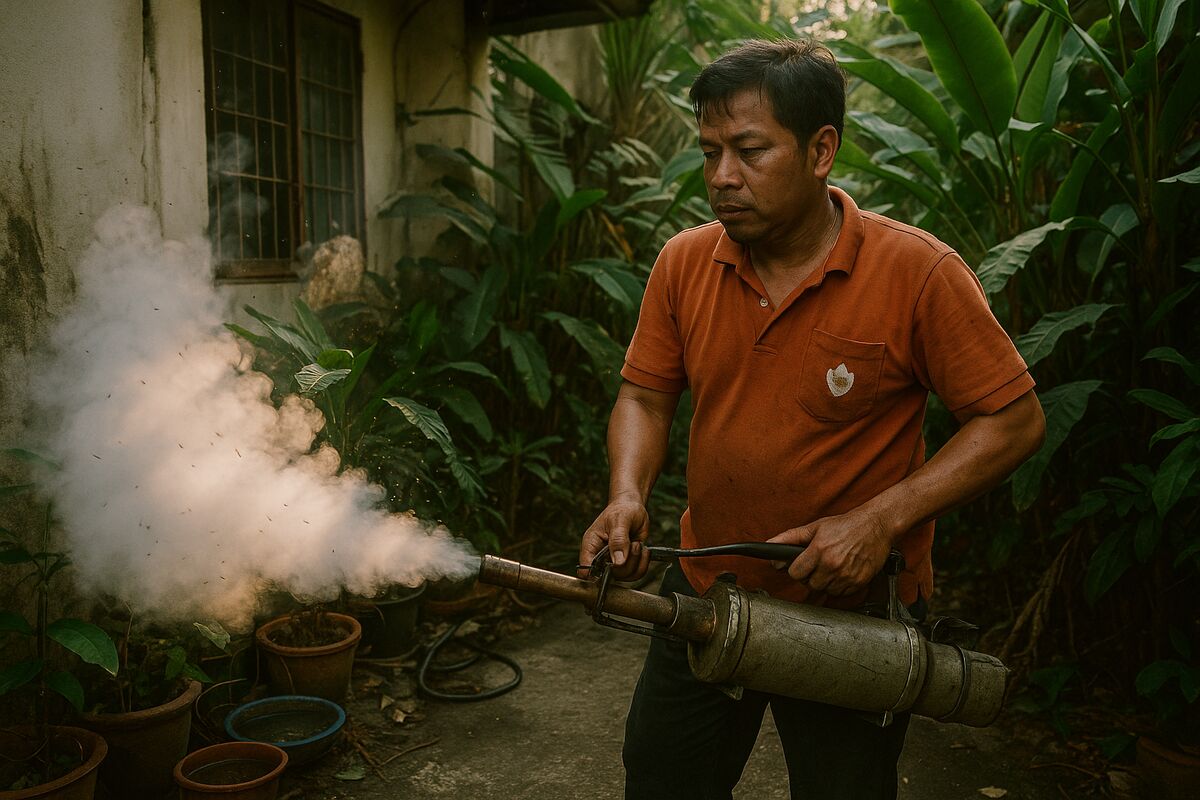
Dengue risk in Bangkok is not evenly spread — and treating it as if it were is why so much mosquito control is wasted effort. Today we're publishing the Bangkok Dengue Risk Intelligence 2026 whitepaper: a district-by-district risk ranking built from real surveillance reporting, Thailand Meteorological Department climate records and thousands of our own licensed field inspections.
Download the full whitepaper (PDF, 15 pages) — district scores, model weights, container data, the property inspection checklist and the economics of prevention.
Here's what it says, in five minutes.
The 2026 district ranking
The model — we call it BDRIM — scores every district 0–100 by combining five weighted signals: epidemiological burden (30%), breeding-container opportunity (25%), rainfall and moisture (20%), human exposure (15%) and humidity/climate (10%).
| Rank | District | Score | Band |
|---|---|---|---|
| 1 | Khlong Toei | 87 | Critical |
| 2 | Huai Khwang | 85 | Critical |
| 3 | Din Daeng | 84 | Critical |
| 4 | Bang Kapi | 84 | Critical |
| 5 | Lat Krabang | 82 | Critical |
| 6 | Bang Khen | 81 | Critical |
| 7 | Sai Mai | 80 | Critical |
| 8 | Nong Chok | 77 | Very High |
| 9 | Suan Luang | 77 | Very High |
| 10 | Phra Khanong | 77 | Very High |
Districts 11–15 — Don Mueang, Min Buri, Bang Na, Saphan Sung and Bang Bon — all score Very High. The interesting part is why districts score high, because it changes the work. Khlong Toei, Huai Khwang and Din Daeng are driven by disease burden plus density: shared condo infrastructure, rooftops, drains and landscaping. Lat Krabang, Sai Mai and Nong Chok get there through breeding and climate: outdoor storage, construction sites, drainage and vacant plots.
Where mosquitoes actually come from
Aedes aegypti — the dengue mosquito — breeds in small artificial containers, not swamps. Our inspection records show which ones matter:
- Most productive per container: tires (14.3% breeding-positive), construction materials (13.1%), buckets and water storage (12.5%), roof and gutter accumulation (11.4%).
- Most common overall: plant pots and saucers — 23% of everything we log. Small volumes, but they are everywhere.
- The 80/20 rule: roughly 22% of properties account for 47% of productive breeding opportunity. Finding those properties first is the whole game.
That's why our mosquito control service starts with a breeding-source survey rather than fogging alone. Fogging knocks down adults for a few days; the containers keep producing replacements.
Timing: the season peaks August–October
The seasonal curve in the whitepaper is blunt: risk starts climbing in May, runs high through June and July, and peaks August through October — September is the single worst month. If your building starts thinking about mosquitoes when the first case appears in September, the productive containers have already been breeding for four months. The right time for a step-up in inspection cadence is May–June.
What to do with this if you manage a property
- Homes and condos: clear plant saucers weekly, check balconies and any stored water after rain, and report standing water in common areas to your juristic office. Our pricing page has flat rates by home size.
- Condo juristic persons and hotel managers: the whitepaper includes a zone-by-zone inspection checklist (roof, balconies, grounds, maintenance, construction, utilities) and a property scoring model you can adopt directly. High-risk properties in Critical districts warrant weekly inspection plus post-rainfall checks in peak season.
- Airbnb and short-stay hosts: guest-facing mosquito problems are review problems. Same-day cover and a dated photo report are the fix — see our host services.
Get the full whitepaper
The complete 15-page PDF covers the full 15-district table with component scores, the BDRIM model weights and risk bands, container-productivity data, the seasonal index for all 12 months, property-level scoring, intervention economics for hotels, and the implementation roadmap.
Download: Bangkok Dengue Risk Hotspots & Aedes Breeding Analysis 2026 (PDF)
Questions about your district or your building? Message LINE @pestsrova or call +66 97 120 3054 — we operate 24 hours across every Bangkok BTS and MRT zone.
Frequently asked questions
Which Bangkok districts have the highest dengue risk in 2026?
In the September 2026 BDRIM assessment, seven districts score in the Critical band (80–100): Khlong Toei (87), Huai Khwang (85), Din Daeng (84), Bang Kapi (84), Lat Krabang (82), Bang Khen (81) and Sai Mai (80). Eight more score Very High, including Nong Chok, Suan Luang, Phra Khanong, Don Mueang and Bang Na. Inner-city districts are driven by density and disease burden; outer districts by outdoor water collections, construction and drainage.
When is dengue season in Bangkok?
Risk climbs from May, stays high June–July, and peaks August through October, with September the single highest-risk month. The practical implication is timing: breeding-source surveys and larval control should be running by May–June so productive containers are gone before peak transmission, not discovered during it.
What are the most common mosquito breeding sites in Bangkok homes and buildings?
Field inspections show plant pots and saucers are the most common water-holding containers (23% of those observed), but the most productive per container are tires (14.3% breeding-positive), construction materials (13.1%), buckets and water storage (12.5%) and roof or gutter accumulations (11.4%). A practical inspection covers the roof, balconies, grounds, maintenance areas and drains — with photos before and after correction.
How does PestsRova use this dengue risk data in its mosquito control service?
The model sets inspection cadence: Critical-band districts and properties get weekly checks plus extra visits after heavy rainfall, while lower bands get monthly or biweekly schedules. Every visit starts with a breeding-source survey, then source removal, aquatic-safe larvicide where water cannot be drained, and a residual barrier on greenery — documented with a dated photo report.
Need it handled professionally?
Get a fixed quote for your Bangkok property in under 60 seconds.
Written by the PestsRova Team
We're Bangkok's documented pest control crew — everything we write comes from real treatment visits across homes, condos and short-stay rentals.
Get our Bangkok pest guides straight in Google — add PestsRova as a preferred source.
Add on Google