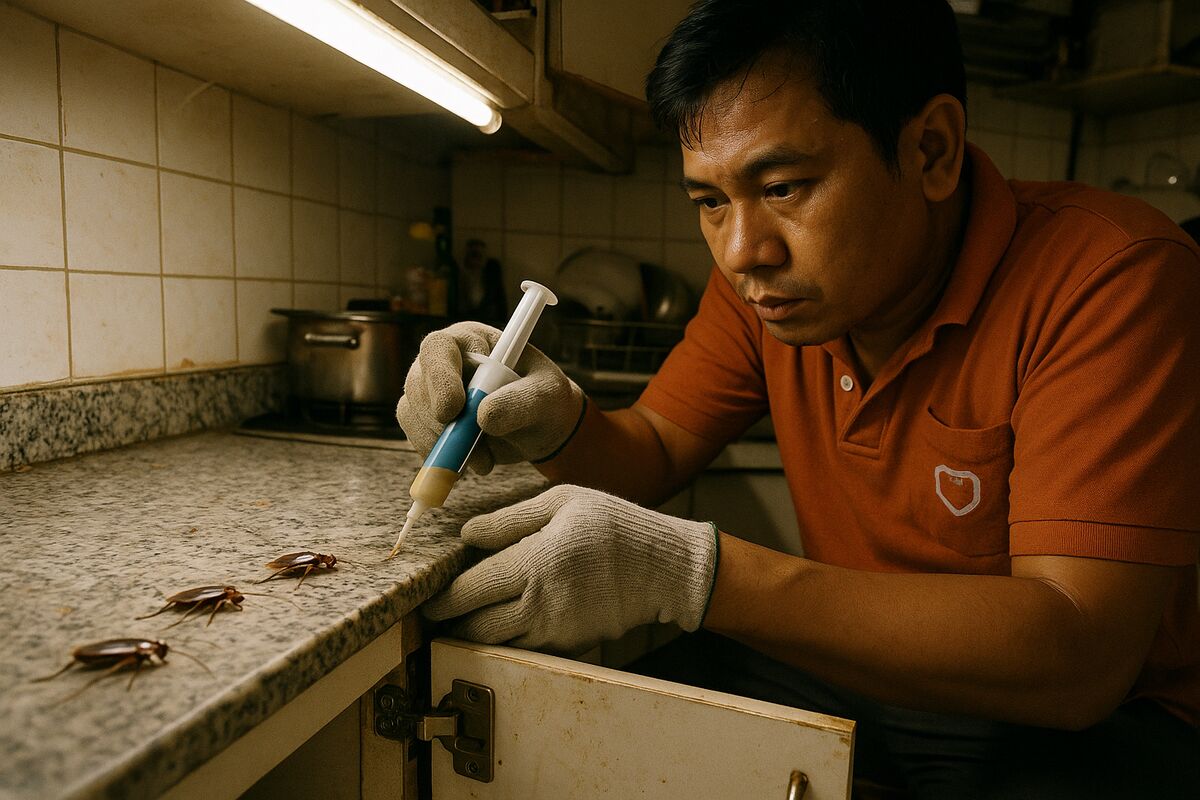
It is 11pm, the air conditioner is losing its fight with the heat, and something the size of a date has just launched itself from the balcony door straight at your face. Welcome to the flying cockroaches of Thailand. If you have lived in Bangkok through a hot season, you have met them. If you have just arrived, you are about to.
The good news is that flying cockroaches are not a separate, mutant species engineered to ruin your evening. They are almost always American cockroaches (Periplaneta americana), the big reddish-brown ones that live in drains, sewers and the damp gaps of every building in the city. They fly, or more accurately glide and flutter, under a specific set of conditions that Bangkok delivers on a nightly basis for half the year. Understanding those conditions is most of the battle. The rest is sealing the routes they use to get in.
This guide explains what is actually flying at you, why it happens on hot nights, where the cockroaches come from, and what a PestsRova technician would do to keep them out of a condo, townhouse or shophouse.
What species of flying cockroaches live in Thailand?
Bangkok is home to several cockroach species, but only a few of them fly in any meaningful way, and only one of them flies into apartments regularly.
- American cockroach (Periplaneta americana): 35–40 mm, reddish-brown with a pale band behind the head. Both sexes have fully developed wings and will fly in warm, humid air. This is the one on your ceiling.
- Australian cockroach (Periplaneta australasiae): slightly smaller, with yellow stripes on the front edge of the wings. Common around gardens and outdoor kitchens. Also a capable flier.
- Brown cockroach (Periplaneta brunnea): looks almost identical to the American and behaves the same way. Most people, and most technicians in a hurry, lump it in with the American.
- German cockroach (Blattella germanica): small, tan, two dark stripes behind the head. Has wings but essentially never flies. If you see small cockroaches around the kitchen, they walked there. Our guide to German vs American cockroaches in Thailand covers how to tell them apart.
The distinction matters because the fix is different. A flying American cockroach is a visitor from outside or from the building's drain system. A German cockroach is a resident that is breeding in your kitchen. You seal against the first and treat for the second.
Why do cockroaches fly at night in Bangkok?
Cockroaches are cold-blooded, so their activity tracks the temperature around them. American cockroaches become much more active, and much more willing to use their wings, when the air is warm and humid. Bangkok's hot-season nights in March, April and May, and the sticky evenings during the rainy season, are close to ideal. Cooler, drier air in December and January sees far fewer flights.
A few other things push them into the air:
- Flooding of their hiding spots. A heavy downpour fills drains and floods sewer lines. Cockroaches living in them climb out and look for somewhere dry, often upward along building exteriors. The first hour after a big evening storm is prime time for a roach through the balcony door.
- Light. Cockroaches are not strongly attracted to light the way moths are, but a lit room against a dark night is a visible opening. A cockroach already airborne and disoriented will often end up in the brightest gap.
- Overcrowding in drains. Large populations in a building's wastewater system push individuals out to find new harbourage, especially in older buildings with cracked pipes and open gullies.
- Mating season behaviour. Adults disperse to find mates, and warm nights are when they do it.
It is worth being precise about the "flying". American cockroaches are not strong fliers like wasps. They launch from a height, glide, and flap to steer. That is why they seem to come from above, land clumsily, and then scuttle rather than take off again. From a ground-floor drain, they rarely fly up to you. From a balcony railing, a tree, or a neighbour's open window, they can absolutely glide in.
Where flying cockroaches come from in a Bangkok building
People assume the roach on the ceiling came from their own kitchen. It usually did not. Trace the typical journey and you find the same handful of entry points in almost every Bangkok home.
Condos and apartment stacks
A condo tower is a vertical stack of bathrooms and kitchens plumbed into shared pipes. Cockroaches travel those pipes. They exit through:
- Floor drains in the bathroom, especially the old-style open gully without a water trap.
- The gap around the air conditioner pipe where it passes through the wall.
- Balcony drains that connect to the building's rainwater system.
- The kitchen sink waste, if the U-bend has dried out because the unit was empty for a few weeks.
Higher floors are not immune. A cockroach that enters the stack on floor 3 can exit on floor 23. Our guide to keeping cockroaches out of a Bangkok condo goes through the unit-level fixes in detail.
Townhouses and shophouses
Older houses have more exterior openings: gaps under doors, ventilation blocks, uncovered drains in the courtyard, and roof spaces connected to the outside. Add a soi with open drainage and a few restaurants, and the nightly supply of cockroaches is effectively unlimited. Here the emphasis shifts from pipes to the building envelope.
Ground-floor units and gardens
Flying cockroaches also live outdoors in leaf litter, mulch, palm trunks and wood piles. A garden unit with a warm light by the door is a landing pad. Australian cockroaches in particular are garden residents first and house visitors second.
How to keep flying cockroaches out: the checklist
You cannot stop cockroaches from flying. You can make your home a hard target. Work through this list and the number of night visitors drops sharply.
Seal the drain routes
- Fit drain covers with a fine mesh or a one-way flap on every bathroom floor drain. Inexpensive stainless covers are sold at any hardware store and take two minutes to fit.
- Keep every trap wet. Run water into the sink, shower and floor drain at least weekly, and before you leave for a trip. A dry trap is an open door.
- Fill the gap around the air conditioner pipe with expanding foam or silicone. Check where the drain hose exits too.
- Seal the balcony drain with a cover or mesh. This one gets missed constantly.
Close the building envelope
- Fit a door sweep on the bottom of exterior doors. The gap under a typical Thai balcony door is wide enough for an adult cockroach to walk in upright.
- Repair torn insect screens on windows and sliding doors.
- Check ventilation blocks and louvre vents in older houses and fit mesh behind them.
- On balconies, avoid keeping cardboard boxes, damp towels or bags of recycling that offer a hiding spot next to your door.
Manage light and timing
- During the hot season, keep the balcony door shut after dark even if you are outside. Use a screen door if you have one.
- Swap bright white balcony bulbs for warmer, dimmer ones. It will not stop a cockroach that is already airborne but it reduces how often one ends up aimed at your living room.
- After a heavy evening storm, expect the drain population to be on the move and double-check that doors and drain covers are in place.
Remove the welcome mat
A cockroach that glides into a room with no food, no water and no hiding place will often leave again or die. One that finds a dripping tap and a bag of rice under the sink stays.
- Wipe surfaces and rinse the sink before bed.
- Fix dripping taps and the condensate drip from the air conditioner.
- Store dry goods, pet food and rubbish in sealed containers.
- Clear the cardboard stash. Cockroaches love corrugated board.
What to do when one is already inside
The ceiling roach is not dangerous, but it is unnerving and it does carry whatever it walked through on the way in. Here is the calm version of events.
- Do not spray a cloud of aerosol at a flying cockroach. You will hit your curtains, your dinner and your pet. Our piece on why DIY cockroach sprays fail explains the longer-term problem with aerosol habits.
- Turn off the main light and leave one lamp on in a corner. The cockroach will usually head to the floor or a wall near the lamp where you can deal with it.
- A shoe, a rolled magazine, or a vacuum cleaner does the job. Bag the remains; cockroach bodies are allergenic.
- Wipe the landing spot with soapy water.
If you are seeing one a night for a week, the issue is structural rather than bad luck. Keep a simple tally: where it appeared, what time, what the weather was doing. That pattern usually points straight at an entry route.
When flying cockroaches mean a bigger problem
A single glider on a hot night is normal Bangkok life. The following are not:
- Cockroaches appearing in daylight. Daytime activity usually means the population is large enough that harbourages are overcrowded.
- Small cockroaches or nymphs in the kitchen. These did not fly in. They hatched nearby.
- Egg cases (dark brown, bean-shaped, about 8 mm) behind the fridge, under the sink or inside cupboards.
- A musty, oily smell in cupboards.
- Cockroaches emerging from a specific drain every evening, which points to a breeding population inside the pipe or the building's sump.
At that point, sealing alone will not fix it. Our full guide to how to get rid of cockroaches in Bangkok covers the treatment side, but the short version is gel baits in the harbourages, a residual treatment along the entry routes, and a follow-up visit to catch the hatchlings.
How PestsRova treats flying cockroach problems
Because the flying ones usually come from outside or from the building's plumbing, a good treatment is mostly about routes rather than rooms. On a typical visit a PestsRova technician will:
- Identify the species (identification is included free) so you know whether you are dealing with visitors or residents.
- Treat drains, pipe penetrations, balcony edges and door thresholds with a residual product that is safe for pets and kids once dry.
- Place gel bait where cockroaches shelter, not where you can see it.
- Point out the gaps and covers you need to fix, because no treatment holds up against an open drain.
- Send a photo and treatment report so you know exactly what was done and where.
Pricing is flat by home size, not by pest, so a studio costs ฿1,590 a visit and a 2-bedroom ฿2,490 whether the problem is cockroaches, ants or both. Full details are on the pricing page. For homes that get a steady stream of hot-season visitors, the 4-Visit Year Package spaces treatments across the year and includes a free re-treat if the cockroaches return between visits. You can read about the general service on the general pest control page.
Quick reference: hot-season cockroach defence
| Problem | Most likely cause | Fix | |---|---|---| | One big roach flies in at night, a few times a month | Hot, humid air; open balcony door | Screen door, door sweep, dim balcony light | | Roaches appear after heavy rain | Flooded drains pushing the population out | Drain covers, wet traps, seal AC pipe gap | | Roaches walk out of the bathroom drain | Open gully or dry trap | Mesh cover with flap, weekly water flush | | Small tan roaches in the kitchen | Resident German cockroaches breeding | Gel bait treatment, not sealing | | Roaches every night from the same spot | Breeding site in pipe or sump | Professional treatment of the route and harbourage |
Flying cockroaches are a feature of living in a hot, wet city built on canals, and no building in Bangkok is entirely free of them. The difference between a home that sees one a season and one that sees one a night is almost always a handful of covers, sweeps and a dry-trap habit. If you have done the sealing and they keep coming, or if the ones you are seeing are small and walking rather than big and flying, get a technician in to find the source. Contact PestsRova through LINE (@pestsrova), WhatsApp or the website form and we will book a visit with an English-speaking lead technician, same day if you need it.
Frequently asked questions
Why do cockroaches fly in Thailand?
American cockroaches are cold-blooded and become far more active and willing to use their wings when the air is warm and humid, which Bangkok delivers nightly in hot season. Flooded drains after heavy rain, overcrowded sewers, mating dispersal and a lit room against a dark night all push them into the air. They glide and flap rather than fly strongly.
What is the big flying cockroach in Thailand?
It is the American cockroach (Periplaneta americana), 35–40 mm, reddish-brown with a pale band behind the head. The Australian cockroach, with yellow stripes on the wing edges, and the near-identical brown cockroach also fly. All three live in drains and gardens and visit homes, unlike the small German cockroach, which breeds indoors and does not fly.
How do I keep flying cockroaches out of my condo?
Seal the routes. Fit fine-mesh or one-way flap covers on every bathroom and balcony floor drain, keep traps wet with weekly water, foam the gap around the air-conditioner pipe, fit a door sweep on exterior doors and repair torn screens. Keep the balcony door shut after dark in hot season and swap bright white balcony bulbs for warmer, dimmer ones.
When is flying cockroach season in Bangkok?
Hot-season nights in March, April and May, plus sticky rainy-season evenings through October, especially the first hour after a heavy storm when flooded drains push the population out. Cooler, drier nights in December and January see far fewer flights. If you see one nightly for a week, the cause is an open entry route rather than the weather.
Need it handled professionally?
Get a fixed quote for your Bangkok property in under 60 seconds.
Written by the PestsRova Team
We're Bangkok's documented pest control crew — everything we write comes from real treatment visits across homes, condos and short-stay rentals.